The Channel Math Has Shifted
Email open rates have been declining for a decade. SMS costs keep rising. Paid ads keep getting more expensive. Organic social keeps capping reach. In 2026, push notifications are the only major customer channel where the unit economics are getting better, not worse.
Here's the comparison ecommerce founders should have on their wall:
| Channel | Open rate | Cost per send | Delivery |
|---|---|---|---|
| 15–20% | $0.01–0.03 | Inbox (often buried) | |
| SMS | 30–40% | $0.01–0.05 | Phone (instant) |
| Web push | 5–10% | $0 | Browser only |
| App push | 50–70% | $0 | Lock screen (instant) |
| Paid ads | n/a | $0.50–5.00 per click | Auction-dependent |
App push notifications are the only channel that combines the highest open rate, the lowest cost per send, and direct lock-screen visibility. That's the whole reason this guide exists.
Why Push Open Rates Are So High
It's not magic — it's three structural advantages:
- Permission-based: a user who installed your app and accepted push opted in to hear from you. That's a much higher-intent audience than your email list.
- Lock-screen real estate: a push notification appears on the most valuable screen on the planet — your customer's lock screen — without any filtering, sorting, or ads competing for attention.
- No spam filters: unlike email, push deliverability is essentially 100%. Apple and Google don't filter push notifications the way Gmail filters promotional email.
The Six Things Push Notifications Make Possible
1. Abandoned cart recovery that actually recovers carts
Abandoned cart emails recover roughly 3–5% of carts. Abandoned cart push notifications recover 15–25%. For a store with $50k/month in abandoned carts, that's $5,000–10,000 of recovered revenue every month — from a channel that costs nothing to send.
2. Flash sales that drive same-hour spikes
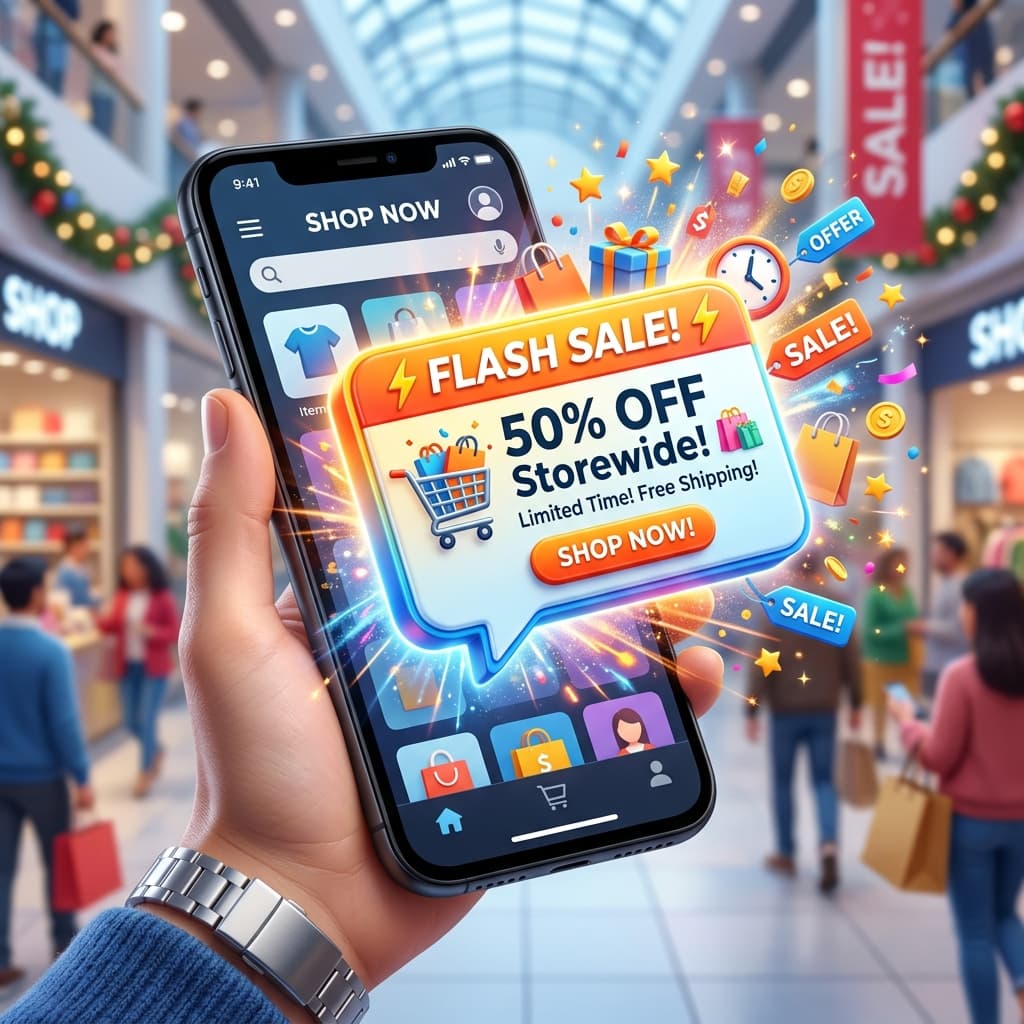
Send a flash sale email and the campaign builds traffic over 6–12 hours. Send a flash sale push and traffic spikes within minutes. For time-sensitive offers, this is the difference between selling out and discounting at the end of the day.
3. Back-in-stock alerts with absurd conversion rates
"It's back!" push notifications convert at 15–25% because the recipient already proved demand by viewing or wishlisting the product. The instant delivery means you catch them before a competitor restocks.
4. Order status updates that build trust
Transactional push notifications ("shipped", "out for delivery", "delivered") hit 80–95% open rates and dramatically reduce "where is my order" support tickets. They cost you nothing and make customers feel taken care of.
5. Win-back campaigns for dormant customers
A 30-day-inactive push with a small re-engagement offer reactivates customers email would never reach because email got buried or unsubscribed from.
6. Owned-channel marketing as paid ads get more expensive
Meta CPMs are up. Google's AI overview is cutting organic clicks. TikTok ads work but auction prices keep climbing. Every store needs owned channels that don't depend on an auction — and push is the highest-ROI owned channel in 2026.
What Push Notifications Are Not Good At
Honest take — push notifications aren't the answer to everything:
- Long-form storytelling belongs in email. Push is short by design.
- Acquiring new customers is paid/SEO/social territory. Push talks to people who already opted in.
- Heavily regulated content (financial, medical) often demands the audit trail email provides.
- Discovery moments for serendipitous browsing — those still happen in email and social.
Push is a retention and transactional channel. The right way to think about it: paid ads acquire the customer, email warms them up, push keeps them.
Why Web Push Is Not the Same Thing
A common question: "Can't I just use web push and skip building a mobile app?"
Web push (browser-based) has structural limitations:
- iOS Safari only added web push recently and adoption is low
- Opt-in rates are 5–10x lower than app push
- Notifications only fire if the user is on a desktop with the browser open
- No deep-linking to in-app product pages
In practice, web push reaches a fraction of your audience and delivers a fraction of the conversion. For a serious retention channel, you need an app. That's why every major ecommerce brand — Amazon, Walmart, Shein, Lenskart, Sugar — invests in their app first and the web as a secondary surface.
The Push Notification Mistake Most Stores Make
The #1 mistake: treating push like email. It's not. Push has different rules:
- 3–5 promotional notifications per week max. More than that and opt-out climbs.
- Send when people are awake in their local time zone. Late-night push uninstalls apps.
- Personalise or pay the price. Generic blasts hurt engagement; personalised pushes lift it by 300%.
- Always include a deep link — to the product, the cart, the offer. Don't dump users on the home screen.
- Transactional pushes don't count toward your frequency cap. Order status notifications are always welcome.
We have a full Shopify push notification playbook covering campaign sequences and copy templates if you want the deep dive.
How to Get Started
To send push notifications, you need three things:
- A mobile app for iOS and Android
- A way to drive installs from your existing customer base
- A push platform that doesn't charge per message
BrewmyApp handles all three. We build true native React Native apps for Shopify and WooCommerce stores and include unlimited push notifications on every plan — no per-message fees, no subscriber tier gates. Once your app is live, you have a retention channel that costs $0 per send and reaches your most valuable customers on their lock screen.
Start building your mobile app free | See push notification campaigns that drive sales
The Bottom Line
Push notifications aren't a "nice to have" in 2026. They are the single highest-ROI retention channel for ecommerce stores, and the gap between stores that have an app + push and stores that don't is widening every month. Email is still important. SMS is still important. But the channel doing the heaviest lifting on revenue per customer is push.
If you don't have a mobile app yet, this is the year to build one.
Related reads:
Ready to Turn Your Store into a Mobile App?
Design and preview your app for free. No coding required.
Start Building for Free